



Fox Sports and NextVR Sign Broadcast Deal
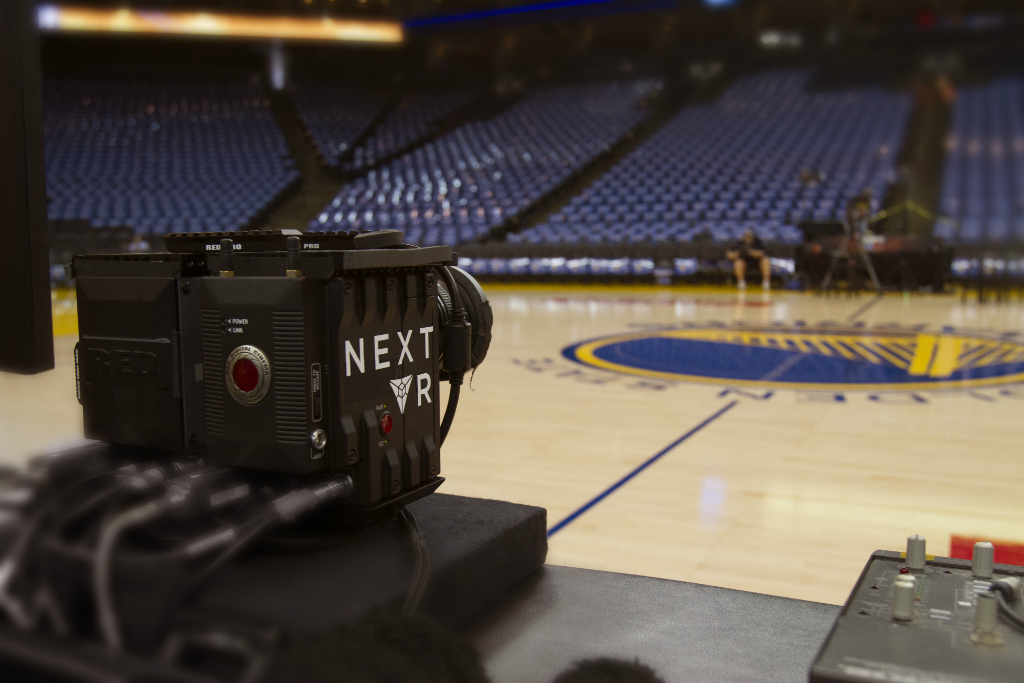
Fox Sports and NextVR have signed a five-year, non-exclusive deal to broadcast major sporting events in virtual reality (VR).
“It’s important for us to be at the forefront of how sports fans are consuming content well into the future. I think virtual reality represents that,” David Nathanson, head of business operations for FOX Sports, told Fox News. “We believe what NextVR is doing in live sports is best in class.”
The first broadcast of the new deal will be of the Daytona 500 this Sunday. The VR broadcast will be free via the NextVR portal.
“This is a watershed moment, or tipping point in the world of virtual reality,” Brad Allen, executive chairman at NextVR, told Fox News. “FOX Sports is a major player and this partnership with them is a milestone in VR and providing these live experiences is unlike anything before. We’re very excited.”
VR viewing is not done in order to replace regular viewing, the organizations explained. It’s there to supplement it.
“We’re calling this the Daytona 500 experience, we’re not trying to cover the race,” Allen said. “It’s going to be as if you’re there, but you’ll be in pit row, the start line, the finish line, up in the stands, on the infield, in the garage—lots of places you normally can’t go.”
(Image: The Golden State Warriors/NBA)
Managing the Growing Needs of Safety & Security for Stadium Events

I don’t recall ever meeting a stadium management professional who thought that they had an easy job. Even if we are surrounded by talented people and have the support we need to do our job, managing the safety and security function for stadiums today is a complex and demanding proposition. But if we break it down and understand the challenges thoroughly, we can identify some strategies that can help us achieve success.
But before we look at our current challenges, let’s consider the “olden days.” And by that, I really only mean about 20 years ago. That’s not too long ago, but it takes us back to a time when stadium management was less complicated and less demanding than it is today. Back then, the stadium manager’s concern was largely on the building itself. The area of responsibility started at the gates and flowed through the building and onto the playing field. On event days, we made sure that the building was provisioned, the equipment readied, and we opened the gates and took tickets. Event days required minimal planning, few resources, and very little changed over time.
Fast forward to today. Modern stadiums at all levels—high school, college, minor league, and major league—have a range of amenities, a variety of spaces, and operations that have a lot of moving parts. Even older buildings enter the fray as multimillion dollar renovation projects add clubs, suites, outdoor event areas, and other elements. What was once a simple process of opening a building has now evolved into managing a complex site with multiple concurrent activities.
To understand and appreciate the complexities of modern stadium safety and security management, let’s consider three factors: the environment, resources, and processes. By examining each of these factors, we can better understand the scope and scale of the challenges we face and identify how we can manage the growing needs of safety and security for stadium events.
Joseph A. Floreano Scholarship + Internship Program: 2015 AVSS & PAMC Recipients…Where Are They Now?

As AVSS and PAMC 2016 approach, we looked back on our 2015 Joseph A. Floreano Scholarship + Internship Recipients for AVSS and PAMC to see where some of them are in the industry today. Learn more about them below.
AVSS:
 Aaron Dimatulac, Student Intern, Missouri State University – Entertainment Management
- After interning at AVSS and VenueConnect in 2015, Aaron accepted a position as the audio & visual technician at JQH Arena in Springfield, Missouri. Recently, Aaron joined the band SayWeCanFly, where he currently serves as a guitar tech, merchandising manager, and assistant tour manager as they begin their 2016 tour of North America and Europe. Click here to learn more about Aaron’s experience as the AVSS Student Intern in 2015.
PAMC:
 Annie (Salamunovich) Wilson, Outstanding Leadership Scholarship Recipient
- After serving as the part-time marketing & promotions coordinator with Portland’5 Centers for the Arts in Portland, Oregon, Annie accepted a full-time position as the assistant production supervisor. Additionally, Annie joined the PAMC Planning Committee and was selected to the IAVM Foundation’s inaugural 30|UNDER|30 class of 2015.
 Jennifer Smart, Scholarship for Industry Women Recipient
- After serving as a box office assistant at the Missouri Theatre in Columbia, Missouri, Jennifer accepted a position with VenuWorks as the assistant box officer manager at the U.S. Cellular Center in Cedar Rapids, Iowa.
 Kendall Judy, Student Intern, University of Alabama – Masters of Fine Arts in Theatre Management
- After interning at PAMC and graduating from the University of Alabama, Kendall accepted a full-time position as the marketing project coordinator at Skylight Music Theatre in Milwaukee, Wisconsin.
Please join us in congratulating these young professionals as they continue to develop and Build Amazing Futures in the industry!
HOK and TAC Arquitectes Selected to Design New FC Barcelona Arena
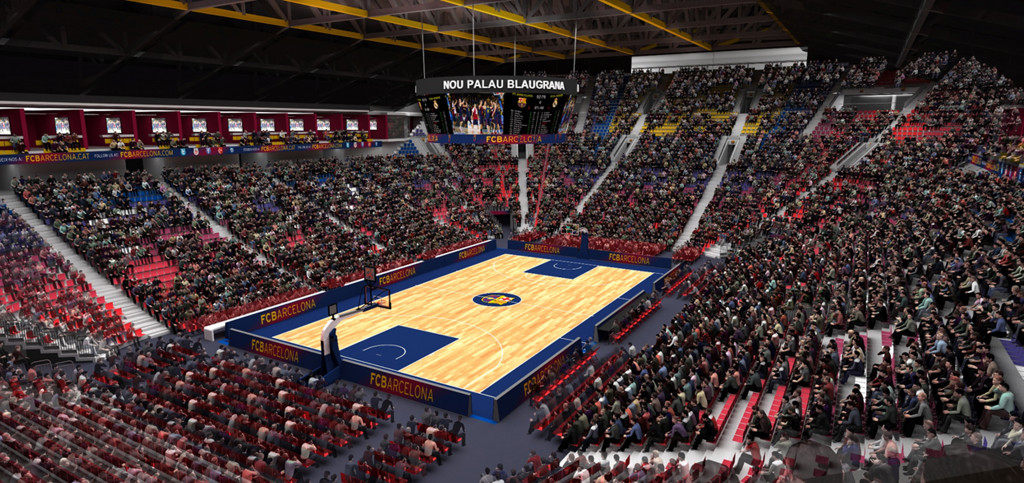
Congratulations to HOK and Barcelona-based TAC Arquitectes on winning a competition to design a new 10,000-seat arena for FC Barcelona. The New Palau Blaugrana is expected to open in time for the 2019-2020 FC Barcelona Lassa basketball season. It will replace the 7,500-seat Palau Blaugrana, which opened in 1971.
A jury including five members of the FC Barcelona sports club, three members of the Col∙legi d’Arquitectes de Catalunya (College of Architects of Catalonia), and one representative from Barcelona’s City Council was unanimous in selecting the HOK-TAC design from among 19 responses to the architectural tender. The Espai Barça jury cited the scheme’s “remarkable innovation” and its “permeability, flexibility, and personality.”
The New Palau Blaugrana will be built on the current site of the Mini Estadi, a 15,276-seat stadium located across from Camp Nou, the home stadium of FC Barcelona. As part of a comprehensive redevelopment of the existing city center facilities at Mini Estadi, the flexible complex will comprise three areas that can operate independently: a 10,000-seat arena, an auxiliary court for 2,000 spectators, and an ice rink.
“This site has tremendous potential,” said Daniel Hajjar, managing principal for HOK’s London office. “We look forward to working with the Barcelona City Council, the Barça technical teams, the residents of Barcelona, and TAC Arquitectes to further develop and integrate our winning concept with the rest of the Espai Barça project and the city center.”
The design for the arena is flexible to accommodate different sporting events while meeting the requirements of Euroleague basketball. Seats are arranged close to the court, in a design that creates a dynamic atmosphere and a wave effect. Support facilities, including shared locker rooms and services for athletes using the main and auxiliary courts, will be located on the same level. Plans also include 18 VIP boxes and two sky bars overlooking the court.
“Our design creates an organic building geometry that supports a seamless progression between the New Palau, the annex court, the ice rink and the FCB Escola academy training facilities,“ said John Rhodes, a London-based director of HOK’s Sports + Recreation + Entertainment practice. “We’re excited about the benefits that this project will bring to FC Barcelona and to this cosmopolitan city.”
(Image: HOK/TAC)
Smiles and Frowns are Contagious
Here’s something to keep in mind the next time you’re networking or working with guests. People in social situations simulate others’ facial expressions in order to create emotional responses in themselves, according to a recent study. For example, if you see someone smiling, you may “try on” the smile yourself without knowing you’re doing it so you can understand what the other person is feeling. This is often completed in a few hundred milliseconds.
“You reflect on your emotional feelings and then you generate some sort of recognition judgment, and the most important thing that results is that you take the appropriate action—you approach the person or you avoid the person,” said Paula Niedenthal, a social psychologist at the University of Wisconsin. “Your own emotional reaction to the face changes your perception of how you see the face, in such a way that provides you more information about what it means.”
Here’s an infographic, also, to help explain it.
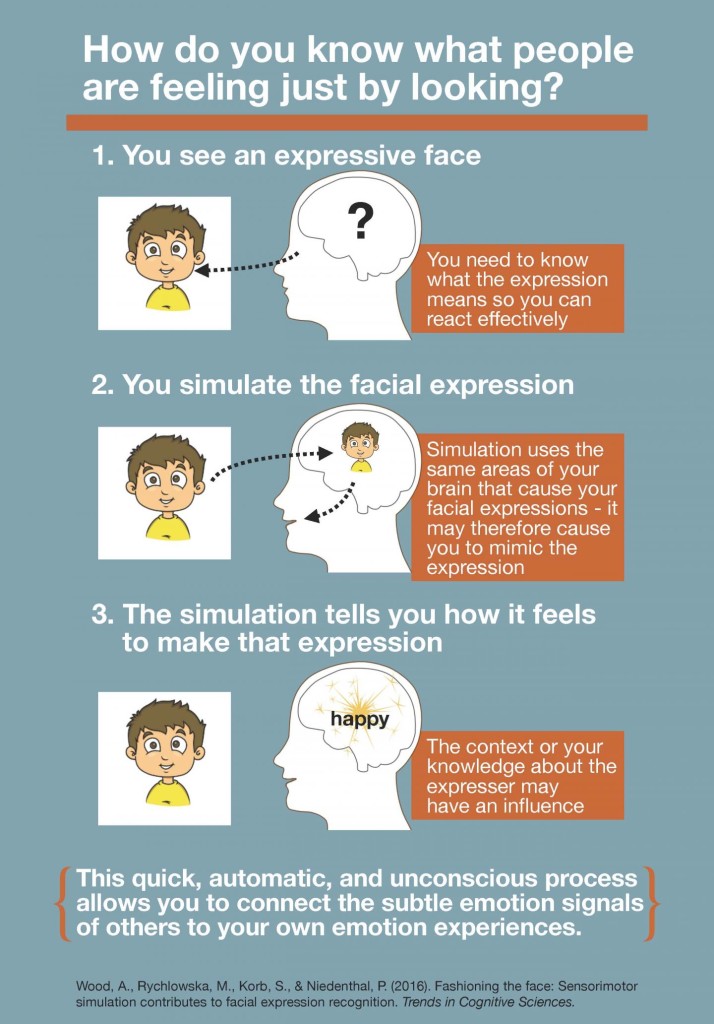
(Image: Adrienne Wood)