


Got Tension? Turn It Into A Positive
It was a loose and lively crowd that filled the room as Tim Arnold presented an Executive Keynote on The Power of Healthy Tension — Overcome Chronic Issues and Conflicting Values. By the end of the powerful presentation, it was an even looser and happier crowd that drifted out of the room ready to take some new principles back to their home venues and businesses.
By nature, tension tends to be a negative word.
“Tension is not a positive word,” Arnold said. “If at home we were eating dinner and it got 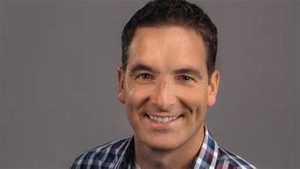 tense, we wanted to move away from there.”
In other words, avoidance, which is also not a good thing.
Arnold gave the audience nuggets on how to make tension an actually good thing, a positive thing.
“We will embrace good tension in this discussion,” Arnold said as he warmed up the crowd. “Tensions can drive us crazy or it can be something we can leverage and lean into to our advantage.”
Arnold cited four key steps to healthy tension: identify your crux tension (seeing is relieving); mind your bias (embrace your opposite); learn the language (there is wisdom in resistance); and make informed decisions (go slow to go fast).
“Tension is just part of life,” Arnold said. “I worked for the United Nations for three years and it was clear when everyone was in the room to meet there was so much division. We wanted agreement on who’s producing, etc. You would have countries who said we need decentralized freedom. As a group we had to accept the fact it was not going away. But there is something innate in us that we want solutions. Tension is not always to solve but to manage it well and make it healthy.”
Arnold used an example of when his wife was six months into her pregnancy of how the couple sought advice from those with children on how to raise the new child. Feedback came from having structure to having flexibility.
“It went from encouraging to discouraging,” Arnold said. “Here we were told effective parenting was either structure or flexibility. Oh my gosh! What do you choose? We were done with reading books and getting feedback.”
Arnold noted that there are at least 25 tensions that leaders manage. One such example is a meeting room of staff could be settled by diverse individuals or a unified team. Managing those tensions and get everyone onto the same page without an either/or attitude is the end goal.
EMSSI Presentations Brings Experts Panelists In To Discuss Latest Updates
An all-star panel of experts took the stage to discuss The State of EMSSI: A Hands-on Approach to Safety and Security with the Portal.
The portal? IAVM, in partnership with Simpleview, is preparing a portal for those in the convention center sector to enter valuable information regarding safety and security measures and protocols at their venues, all designed to eventually help create guidelines that will bring the sector closer in alignment with their brethren in the arena and stadium world where such security measures are mostly already in place. Such compliance and certification will also be recognized by the Department of Homeland Secyurity Safety Act Office.
With IAVM Education Director Mark Herrera setting the stage for the panelists, a room full of attendees soaked up the knowledge and participated in a lively Q&A session following the session. Herrera noted that 47 terrorist plots have been foiled since 9/11. That in itself should give any public assembly venue cause for concern and the desire to make sure their facilities are as safe as possible for the thousands of guests who enter each time.
“The premise is that if there is one attack against a convention center that it affects us all,” said Bill Flynn, president, Garda Risk Management. “Convention centers lack the consistent industry-wide guidelines and best practices that we find primarily in the sports leagues, which are at the front.
“We helped write guidelines for this industry, but it has to be by the industry and for the 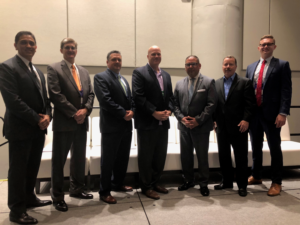 industry to be successful. Your industry has to have buy-in. It can’t just be the convention center’s responsibility, but your vendors and your partners as well.”
Flynn noted that while stadiums and arenas largely have known events that repeat themselves, convention centers are unique in that different events move in and out. While there might be a floral convention at one end of the building not posing much of a threat, another end of the facility might have a more charged event taking place.
John Gonzalez, George R. Brown Convention Center in Houston, and Brett Mitchell, Overland Park Convention Center in Overland Park, Kansas, discussed their respective participation as test pilot venues for the portal that represented a major city convention center versus a small to mid-size convention center.
Gonzalez showed a slide at his facility’s labor check-in and noted that while employees must have an ESCA badge, there are now also different colored wristbands that expire each day at midnight and a new color must be worn the next day for entrance. Magnetometers are also part of the admittance.
Mitchell said that his venue’s guidelines must be flexible and realistic and added that although he has been at the facility since 2001 he only recently discovered a very important need to partner with an emergency response team.
“I had no idea of the resources available to us,” he said. “Now we have monthly meetings. Invite them to lunch. Build those relationships.”
Matt Dimmick, security and emergency readiness specialist with STV Inc., served as a third-party reviewer for the two pilot venues and said that good work was being done as the gap between the guidelines at the venues and the Safety Act Office was being closed.
Speaking about the portal, Andrew McLeod of Simpleview noted that there are seven domains or courses that those with access to the portal will see that include questions such as do you do this, how do you do this, and why do you do this? All questions and answers are obviously important in helping build the eventual guidelines that will benefit all in the sector.
Recipients Celebrate McElravy, Anzivino & Legacy Awards
The first full day of VenueConnect started on an upbeat note as three major awards were presented to three deserving individuals as recipients of the IAVM Foundation Legacy Award, Charles A. McElravy Award, and Joseph J. Anzivino Distinguished Allied Award. In addition to that celebration, those honored as in the 30 Under 30 were also recognized.
Steve Peters, CVE, was named recipient of the Legacy Award for his efforts and contributions
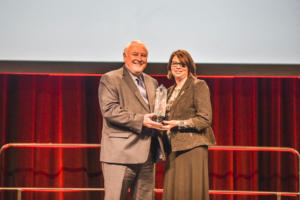
Steve Peters, CVE
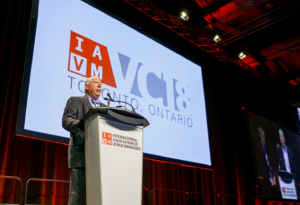
Jack Hagler, ASTC
Robyn Williams, CVE, received the association’s most prestigious award when she was selected to
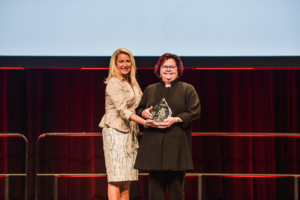
Robyn Williams, CVE
“It is deeply personal for me,” she said. “When I look around like in this crowd, I see diversity in a room, but not in leadership roles. This seemed really wrong to me.”
To that end, Williams asked the audience to hold her accountable as she continues to promote diversity and inclusive leadership, and thanked her colleagues on the committee for their passion.
History Of Theatres In Toronto Draws A Full Room For An Enlightening Experience
The History of Theatre in Toronto was completed in a world-record 75 minutes on Monday morning at the Metro Toronto Convention Centre under the astute leadership of presenters Robert Long, ASTC, principal consultant, Theatre Consultants Collaborative, and Scott Crossfield, ASTC, design principal, Theatre Projects.
OK, the actual history of theatre in a world-class city such as Toronto cannot be covered in such a short time span, but Long and Crossfield kept the session moving in their seventh installment of presenting the history of theatres of the host city in which they present. This one was no different, and a crowded room that had people standing at the back was only too happy to be a part of the proceedings.
Cue the first slide to reveal the topic of the session: History of Theatres in Toronto. Jump

Robert Long
Once the laughter subsided, it was off to the races for a most informative morning of education and enlightenment.
The duo spend countless hours on researching the history of theatres, something quite evident as the slide show moves along and helps attendees understand not just how and why venues were built, but what has happened to many of them along the way. Some were gutted by fire, some faced the demolition wrecking ball, and in the case of Toronto, four long-standing theatres still stand.

Scott Crossfield
The second part covered legitimate theatres in the city beginning also in 1849 with the Royal Lyceum, which was renamed the Prince of Wales in 1860, something that happened many times over the
years with local theatres.
Cinema debuted in 1896 with the first motion picture shown, and in 1910 silent movies popped up. Shea’s Hippodrome opened in 1914 at a cost of $245,000 as the “Home of Vaudeville, and in 1920 it was the Pantages Theatre opening as a combination vaudeville and motion picture house.
Finally, the third part examined performing arts centers, beginning in 1960 with the O’Keefe Centre and carrying forward to many of Toronto’s well-known venues of today.
Throughout Toronto’s rich history, the survivors include the Loew’s Yonge Street Theatre, Royal Alexandra Theatre, St. Lawrence Hall, and Massey Hall.
Do not think of the session as a hum-drum history lesson only. Long and Crossfield paint a true appreciation of performing arts theatres that is evident in their delivery and discussion. It was enough to send a full room to the exits with much to ponder and discuss and hopefully go see while in Toronto.
Jason Stitt To Lead Executive Bootcamp On Negotiation, Upstart Communication At VenueConnect
Jason Stitt with the Stitt Feld Handy Group will lead two events at VenueConnect that will grab the interest of attendees. Those include both the Executive Bootcamp and well as a session on Upstart on Communication. His Canadian-based company offers professional development programs around the world and is the largest provider of dispute resolution services in the world.
With both on his schedule, he took a few minutes to share some thoughts about what to expect in Toronto at VenueConnect.
Knowing that you are doing a couple of different sessions, please share some main takeaways you would like for attendees to return to their venues with for both the boot camp on negotiation and the Upstart on Communication.
I find that one of the great things at the end of a workshop is hearing the wide variety of takeaways the participants have from the workshop. I believe 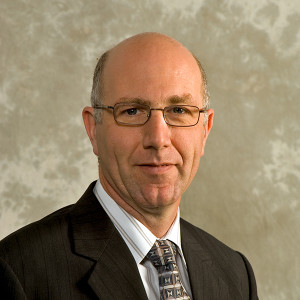 that at the end of both sessions the participants are going to feel like they are well equipped to deal with a wide variety of difficult situations that will arise for them. People tend to report that they have been able to use the skills gained in a number of different aspect of their lives. I’d like to get people to approach difficult negotiations and conversations with more ease, as well as giving skills that will help to avoid being in those problematic positions from the beginning. I find that the takeaways from the talks will give the participants the ability to better understand where others are coming from and will put them in a better position to be successful and advance professionally.
What most often gets overlooked in negotiating tactics? This must be important as it could result in all kinds of monies lost (or not earned, etc.).
One key thing that I find people often overlook is the power of a relationship. An interesting thing that I’ve noticed is that it can be overlooked and misunderstood in two seemingly opposite ways.
1- The most common way people overlook the importance of a relationship is to think of a negotiation as a 0 sum game. They think that winning a negotiation is getting the best possible price for the good/service they are trying to buy or sell. The flaw with this approach to a negotiation is what happens with an ongoing relationship when the person that you are negotiating with has acted this way. After a deal is reached there is likely going to be an implementation component to the agreement and the person who got a bad deal is going to want to make some of that money back somehow. This is how we end up with people who brag about haggling to get great deals, also complaining about lousy service.
2-There is another side to the coin with this. Sometimes in negotiation people will overemphasize the impertinence of a relationship when negotiating. These people can sometimes be willing to take a bad deal to maintain the relationship when there is actually a better deal available to them.
Both of these forms of overlooking the importance of relationship can be potentially damaging in the long term.
Describe the general nature of your presentations and their interactivity with the audience, etc.
In my presentations I always want to keep the audience involved as much as possible. I’ve sat through enough presentations where someone is at the front of the room pontificating for three hours to know what the audience thinks of that. Throughout the presentations I give I will ask for audience feedback and experience. The people that I present to always bring a lot of valuable experience to the table and I know we can all learn from that. I also like to include an interactive exercise in my talks so that people are not just sitting there listening to me. This accomplishes a couple of things. It gets the participants actively involved in what’s happening (instead of checking their phones) and gives us a joint experience that we can then all discuss as a group.
Lastly, if there is anything else that attendees should know ahead of time about why they need to be at your session? Give that good sales pitch!
They should know that these will be fun interactive talks and they will learn a lot! I am going to give them a number of tools that they will be able to implement in various areas of their work. It won’t just be standing at the front of the room presenting on theory, it will keep everyone interested and engaged!